
Metro & Smart City Boost Property Growth 2026
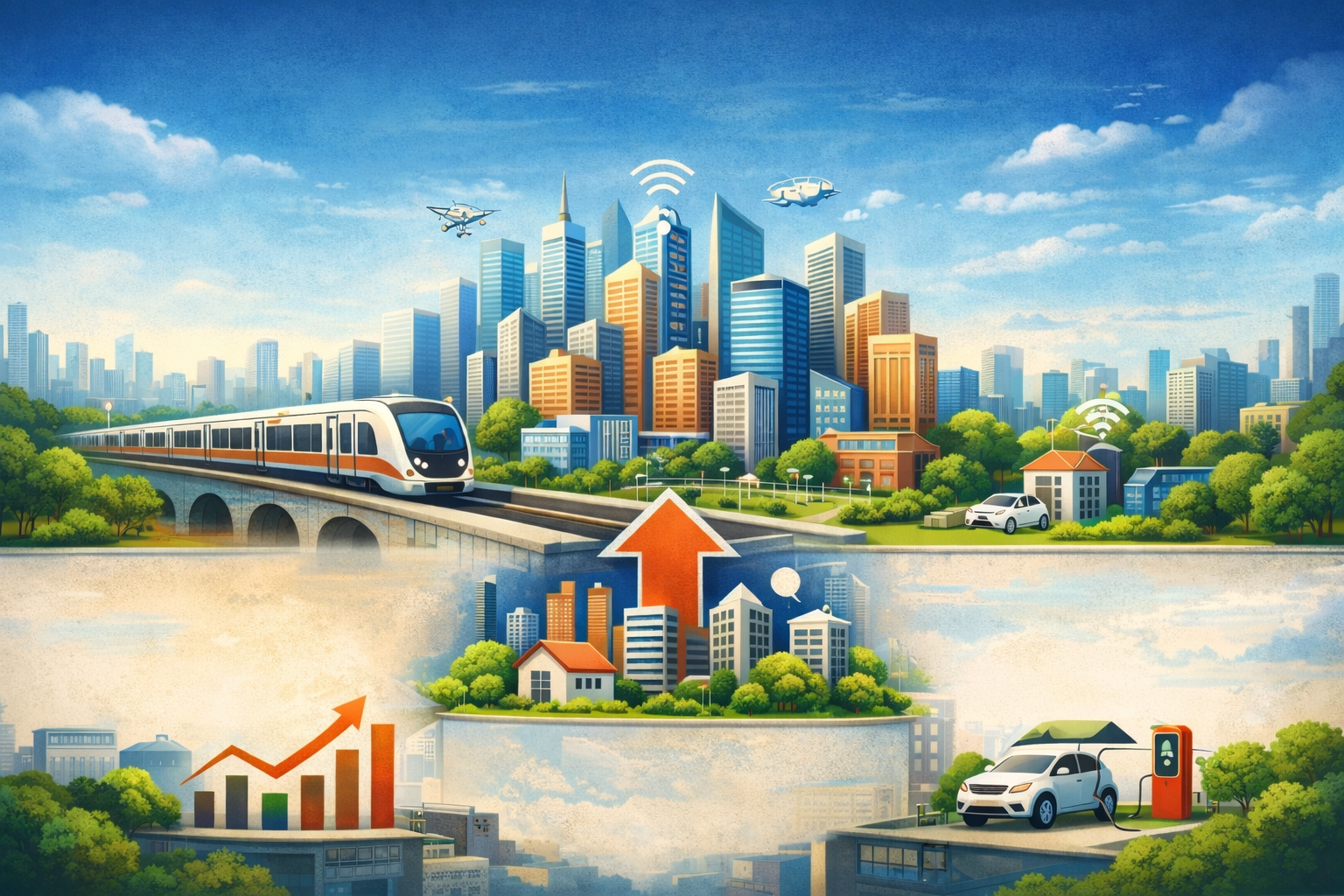
The real estate market in 2026 is witnessing a transformative shift, largely fueled by rapid metro connectivity and structured Smart City development. Across major Indian cities, improved urban mobility and modern infrastructure have become key drivers of property appreciation. Homebuyers today are not just investing in apartments; they are investing in connectivity, convenience, and future growth potential. As metro corridors expand and smart infrastructure upgrades take shape, residential and commercial properties located near these developments are experiencing higher demand and faster price appreciation.
One of the biggest advantages of metro connectivity is time efficiency. With dedicated metro corridors reducing traffic congestion, customers can now reach their residential projects, workplaces, and commercial hubs on time without the stress of unpredictable road delays. For working professionals and business owners, this reliable connectivity significantly improves daily productivity and quality of life. Projects located near metro stations are especially attractive because they offer seamless access to IT hubs, business districts, airports, and educational institutions. As a result, properties close to metro lines are witnessing increased buyer inquiries and faster sales conversions in 2026.
Smart City development has further strengthened property growth in recent years. Government-led initiatives focusing on upgraded roads, digital infrastructure, better drainage systems, green spaces, and integrated public utilities have transformed urban living standards. Modern infrastructure, such as wide arterial roads, flyovers, intelligent traffic systems, and sustainable water management, has enhanced the overall livability of emerging residential corridors. These improvements not only attract end-users but also boost investor confidence, as well-planned infrastructure ensures long-term value appreciation and lower risk.
Another major impact of metro connectivity and smart development is the rise of new micro-markets. Areas that were once considered peripheral are now thriving real estate destinations due to improved accessibility. Buyers are increasingly willing to invest in projects slightly away from city centres because metro connectivity ensures quick and affordable commuting. This shift has created balanced urban growth, where both developers and customers benefit. Developers launch premium residential projects near upcoming metro stations, while buyers secure properties at competitive prices with strong future appreciation potential.
In 2026, property growth is no longer driven solely by location—it is driven by connectivity and infrastructure. Customers are making informed decisions, prioritising projects that offer easy metro access and modern civic amenities. As Smart City initiatives continue to expand and metro networks become more integrated, the demand for well-connected residential projects is expected to rise further. For homebuyers and investors alike, metro-connected properties in smart urban zones represent a strategic investment opportunity, combining convenience, lifestyle enhancement, and long-term financial growth.