Real Estate Marketing Trends Developers Are Using in 2026
The real estate sector in 2026 is no longer driven by traditional advertising alone—it is powered by technology, data, and customer-centric strategies. Developers today are focusing on creating highly targeted, digital-first marketing systems that not only generate leads but also convert them into confident buyers. With most homebuyers starting their search online, digital visibility, trust-building, and seamless customer experience have become the backbone of real estate marketing.
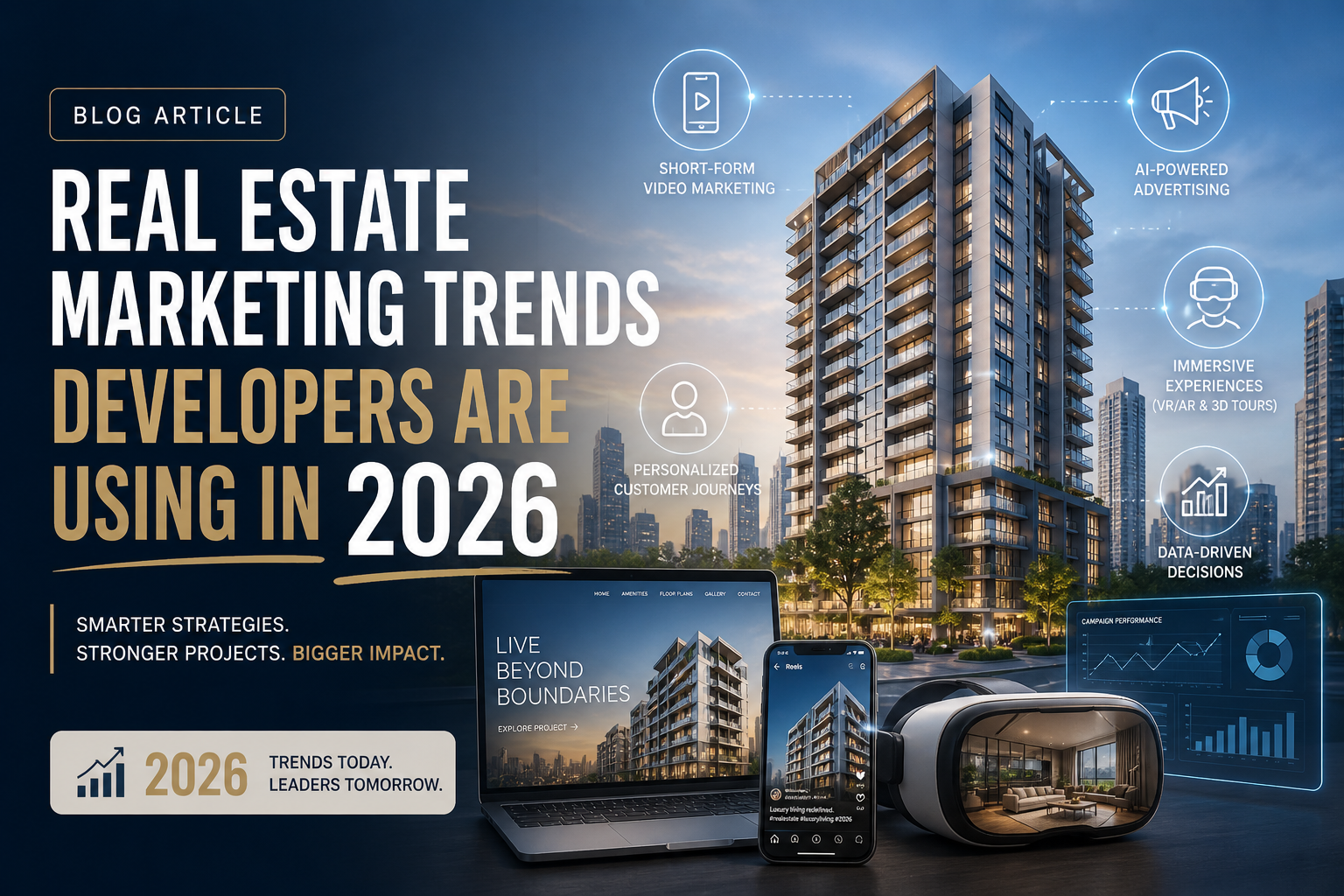
One of the biggest trends developers are using to sell apartments is AI-powered marketing and hyper-personalisation. Artificial intelligence helps analyse buyer behaviour, preferences, and budget to show highly relevant property options. Chatbots, automated WhatsApp follow-ups, and predictive lead scoring ensure that potential buyers receive instant responses and curated recommendations, increasing the chances of conversion. At the same time, developers are using hyperlocal targeting, such as ads focused on specific areas like “flats near IT hubs” or “apartments under ₹50 lakh in Rajarhat,” which attracts serious buyers with strong intent.
Another major marketing shift is the rise of video-first and immersive property experiences. Developers are heavily investing in short-form videos, drone shoots, and 3D walkthroughs to showcase projects more effectively. Virtual Reality (VR) and Augmented Reality (AR) allow customers to explore apartments remotely, helping them make decisions without physical visits. In fact, many buyers today are willing to shortlist or even finalise properties based on virtual tours, significantly speeding up the buying process. These visual tools not only improve engagement but also build confidence among buyers.
Social media and content marketing are also playing a critical role in influencing buying decisions. Developers are creating informative reels, location guides, investment insights, and customer testimonials to educate buyers rather than just sell properties. Influencer collaborations and even celebrity endorsements are being used to build trust and brand credibility in a competitive market. Additionally, a strong online presence through SEO, Google Maps listings, and customer reviews ensures that when a buyer searches “property near me,” the developer’s project appears prominently.
Looking ahead, future marketing trends in real estate are becoming even more technology-driven and transparent. Innovations like blockchain are being explored to make property transactions more secure and fraud-proof, while digital twins (virtual replicas of buildings) are helping buyers understand project performance and design before completion. Data-driven marketing will continue to evolve, where developers can reach customers exactly when they start thinking about buying a home, using behavioural insights and online activity patterns.
In the coming years, the focus will shift towards end-to-end digital buying journeys, where customers can discover, evaluate, and even book properties online from any location. From virtual site visits to AI-driven consultations and instant documentation, the process will become faster and more convenient. Developers who adopt these upcoming trends—combining technology, personalisation, and trust—will not only attract more buyers but also make property buying easier, smarter, and more accessible for customers across different locations.